
Oil Filtration for Marine Vessels
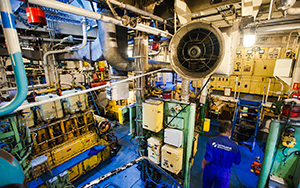 Managing bunkered fuel introduces distinct operational hazards: Very Low Sulfur Fuel Oil (VLSFO) frequently carries abrasive catalytic fines (aluminum and silicon) that cause rapid scoring of fuel injection equipment and cylinder liners, while Marine Gas Oil (MGO) and Marine Diesel Oil (MDO) present high risks of water contamination and wax formation. Concurrently, water ingress into lube oil systems threatens oil emulsification and catastrophic bearing failure under continuous duty. Forced to operate within cramped engine rooms under relentless uptime pressure, maritime crews rely on continuous fuel treatment and lube oil filtration to mitigate these operational risks and prevent costly downtime.
Marine Oil Filtration: Safeguarding Fuel Integrity, Maximizing Vessel Uptime
Why Marine Oil Filtration Is Different
Unlike land-based machinery running on predictable fuel supplies, marine vessels constantly bunker varying fuel types at ports worldwide. Since the IMO 2020 sulfur caps, ships rely heavily on complex VLSFO blends that frequently react when mixed in settling tanks, precipitating heavy asphaltene sludge that clogs strainers and starves engines. Beyond sludge, residual fuels harbor microscopic catalytic fines and hard aluminum and silicon particles from refinery cracking that score fuel pumps and cylinder liners, while distillates like MGO and MDO pose constant risks of wax fallout and water contamination.
The danger is not limited to the fuel supply. Main engine lube oil operates under relentless, high-load duty cycles where condensation or cooling water leaks pose an immediate threat. Unchecked water ingress emulsifies the lube oil, destroying its film strength and triggering bearing failure. Centrifugal purifiers and bypass oil filtration systems must continuously fling out dense particles, wear metals, and free water while the ship remains under full power.
Crews have to manage all of this inside cramped, hot engine rooms with minimal overhead clearance. Major classification societies (such as ABS, DNV, and Lloyd’s Register) mandate strict fail-safe redundancies, fire safety isolation, and automated self-cleaning capabilities. Failure of the purification system can force engine derating or shutdown, making redundancy a classification requirement.
Reliable marine oil filtration when failure isn’t an option!
Fuel Oil Filtration & Purification for Vessels
Effective fuel oil filtration is a multi-stage process that begins as soon as fuel is received onboard. Each marine oil filtration stage is designed to remove a different type of contaminant before it reaches engine components. From bunkering through final delivery to the engine, properly selected shipboard fuel filtration and purification equipment helps maintain fuel quality, reduce maintenance requirements, and support reliable engine performance. To improve fuel efficiency and cut fuel costs, better diesel fuel management is the answer!
Centrifugal Purification for HFO & MDO
For heavy fuel oil (HFO) and marine diesel oil (MDO), centrifugal purifiers remain the primary method of removing water and high-density solids. Operating at high rotational speeds, centrifugal purification systems separate contaminants by density rather than by filter media, allowing them to continuously remove water, sludge, rust, and fine abrasive particles while the vessel remains in service.
Ideally, centrifugal separators are installed between the holding tank (settling tank) and the day tank, providing continuous fuel conditioning before the fuel reaches the engine. When properly maintained and operated at the correct temperature and flow rate, they significantly reduce contaminant loading on downstream oil filters and extend the service life of injection equipment.
 GEA Westfalia disc-stack centrifuges purify HFO and MDO by using high rotational speeds up to 12,000 RPM, generating 7,000 to 10,000 Gs of centrifugal force, to separate water, sludge, and abrasive catalytic fines from fuel before combustion. With dense, high-viscosity HFO preheated to 98°C (208°F) and lower flow rates than ambient, low-viscosity MDO, GEA Westfalia separators operate as 3-phase purifiers (separating oil, water, and solids).
Fuel/Water Separation & Coalescing
Fuel/water separators and coalescing systems provide an alternative to centrifugal purification for vessels that operate primarily on cleaner distillate fuels such as Marine Gas Oil (MGO) and Marine Diesel Oil (MDO). Rather than relying on centrifugal force, these systems use filter media to remove particulate contamination while separating free and dispersed water from the fuel stream. Fuel/water separators are often selected for vessels where fuel quality is generally consistent, but water contamination remains a recurring concern, such as patrol craft, offshore support vessels, ferries, tugs, and commercial workboats.
A coalescing system works by forcing contaminated fuel through a coalescer element that captures microscopic water droplets and combines them into larger droplets. As these droplets grow, gravity causes them to settle into a collection sump, where they can be drained or automatically discharged. A downstream separator element prevents the collected water from being re-entrained into the fuel while providing additional particulate filtration before the fuel reaches the engine. This two-stage process effectively protects injection pumps, injectors, and fuel control equipment from corrosion, poor combustion, and premature wear caused by water contamination.
 For operators seeking an alternative to centrifugal separators, Donaldson Facet fuel/water separation systems (formerly Kaydon Filtration) combine high-efficiency coalescing technology with fine particulate filtration in a compact package. Donaldson Facet diesel fuel filtration systems remove free water, coalesce dispersed moisture, and capture solid contaminants in a single pass. The result is cleaner fuel delivered to the diesel engine, reduced filter maintenance, and improved reliability for propulsion and auxiliary diesel equipment operating on marine distillate fuels.
Bulk Fuel Transfer & Bunkering Filtration
The condition of fuel entering a vessel has a direct impact on every downstream filtration and purification system. During bunkering and bulk fuel transfer, contaminants such as rust, scale, sand, welding debris, dirt, and water can be introduced from storage tanks, transfer hoses, barges, or dockside infrastructure. Removing these contaminants before the fuel reaches onboard storage tanks reduces the burden on marine oil filtration systems while helping preserve fuel quality throughout the vessel’s fuel system.
Bulk fuel filtration systems are installed in transfer lines to clean fuel as it is loaded onboard or moved between storage tanks. Unlike centrifugal purifiers or fuel/water coalescing systems, which continuously condition fuel already in service, these systems are designed to intercept contamination at the point of transfer. High-capacity filter housings can accommodate the flow rates required during bunkering while capturing particulate contamination before it enters the vessel’s fuel storage system.
Donaldson Facet bulk fuel filtration systems are engineered for high-flow fuel transfer applications and can be configured to remove particulate contamination, free water, or both, depending on the fuel and operating requirements. By filtering fuel during bunkering, operators reduce contaminant loading on downstream purification equipment, extend filter service life, and minimize the risk of introducing abrasive particles or water into onboard tanks. For vessels that regularly bunker from multiple suppliers or ports, filtration during fuel transfer provides an additional layer of protection against inconsistent fuel quality.
Cat Fine Removal
Catalytic fines are among the most damaging contaminants found in marine fuels, particularly Very Low Sulfur Fuel Oil (VLSFO) and Heavy Fuel Oil (HFO). These abrasive aluminum and silicon particles can pass through conventional filtration systems and cause accelerated wear on fuel pumps, injectors, and cylinder liners. For vessels operating on residual fuels, GEA Westfalia Separator centrifugal separators are specifically designed to remove these high-density contaminants before they can damage critical engine components. Using high-speed centrifugal force, the GEA Westfalia CAT Fine Master separators continuously separate catalytic fines, sludge, water, and other dense contaminants from the fuel stream without relying on disposable filter media.
Lube Oil Filtration & Purification for Marine Engines
Lube oil filtration is critical to protecting marine engines that operate under continuous load for extended periods. Main and auxiliary engines generate constant levels of wear particles, carbon deposits, sludge, and fine contaminants that can circulate through the lubrication system if not removed. Unlike traditional inline filtration, bypass systems continuously clean a portion of the oil flow at a lower rate, allowing them to capture much finer particles without creating excessive pressure drop across the main lubrication circuit. This helps maintain oil cleanliness, reduce abrasive engine wear, and extend oil service intervals.
 Marine propulsion and power generation equipment use bypass oil centrifuges because they remove ultrafine contaminants that standard lube oil filters can not capture. By using centrifugal force rather than disposable filter media, centrifugal filters separate soot, sludge, wear metals, and other solid particles from the lube oil while the engine is operating. View our case studies of proven lube oil filtration results on Wärtsilä, Everllence (MAN Engine), Hyundai HiMSEN, Caterpillar, Progress Rail EMD, Jenbacher, and INNIO Waukesha engines to see how centrifugal bypass filters reduce wear, maintain oil quality, and support reliable engine performance.
Use our centrifugal oil filter ROI Calculator to see how much your operation could save by extending oil change intervals with the IOW Group oil centrifuge filter. The IOW Group on-engine centrifuges ensure optimal performance across major brands of marine engines.
Marine vessels requiring continuous self-cleaning full-flow protection and backwash lube oil filters benefit from automated contamination removal without frequent manual intervention. These oil filters are installed directly in the lubrication circuit and remove particulate contamination from the entire oil flow before it reaches the engine. Each engine oil filtration platform has unique lubrication requirements, operating conditions, and filtration challenges. Lube oil filtration can be matched to the specific requirements of each OEM engine manufacturer. Explore the eQlyps Automatic Backflushing Lube Oil Filter.
Centrifugal offline filtration delivers superior contaminant removal to keep engine oil clean!
Hydraulic Oil Filtration for Deck & Marine Equipment
 Hydraulic systems power critical deck and maneuvering equipment under high pressures and varying loads, making oil cleanliness essential for reliable performance. Grit, saltwater intrusion, wear metals, dirt, and oil degradation damage pumps, valves, and actuators, leading to reduced efficiency, increased maintenance, and future failures. To keep deck gear and steering running without constant maintenance, continuous hydraulic oil filtration is a must.
Off-line “kidney loop” systems allow for finer contamination removal without restricting the main hydraulic system. Centrifugal kidney loop filtration systems remove fine solids, sludge, and oil degradation byproducts without relying on disposable filter elements.
Donaldson Facet hydraulic oil filtration systems (Kaydon) are designed for maritime applications where space, reliability, and continuous operation are key considerations. These systems maintain target hydraulic oil ISO cleanliness levels (ISO 17/15/13) to minimize abrasive wear and protect hydraulic systems. This hydraulic oil cleaning solution, paired with high-quality filter elements, delivers superior contaminant removal and extended equipment life.
Frequently Asked Questions about Marine Oil Filtration
What’s the difference between a fuel purifier and a fuel filter on a vessel?
A fuel purifier (centrifugal separator) removes water, sludge, and dense solids by spinning fuel at high speed, and works continuously while the engine runs. A fuel filter uses a replaceable media element to trap particulate contamination and is typically installed downstream, closer to the engine, as a final polishing stage. For marine applications, on-engine fuel filters normally have a 35-40 micron rating.
How often should marine lube oil be centrifuged?
Main and auxiliary marine engines under continuous duty typically run centrifugal lube oil purification continuously as a bypass process rather than at fixed intervals. The purifier processes a slipstream of oil around the clock, removing wear metals, soot, and water as they accumulate rather than waiting for a scheduled service.
Can I retrofit a centrifugal oil filter to an existing marine engine?
Yes! Bypass centrifugal oil filters are installed alongside the existing lubrication circuit without modifying the engine itself and are available for most major marine engine platforms, including Wärtsilä, Everllence (MAN), Hyundai HiMSEN, Caterpillar, and Jenbacher. Depending on the engine, you can either use the engine lube oil pump or an external feed pump for the centrifugal filter oil inlet. Contact us with your engine make and model for a compatibility assessment.
What is a cat fine and why does it matter for marine fuel?
Catalytic fines (cat fines) are hard aluminum and silicon particles left over from the refinery cracking process, most concentrated in residual fuels like VLSFO and HFO. Because they are abrasive and can pass through conventional fuel filtration, cat fines cause accelerated wear on fuel pumps, injectors, and cylinder liners if not removed by centrifugal purification.
Do marine oil filtration systems need classification society approval?
Requirements vary by vessel class and flag state, but major classification societies (ABS, DNV, Lloyd’s Register) typically mandate fail-safe redundancy, fire safety isolation, and automated self-cleaning capability for shipboard fuel and lube oil purification systems. Failure of the purification system can force engine derating, so redundancy is often a class requirement rather than optional.
What’s the difference between oil filtration and an oily water separator?
Oil filtration protects the engine by removing contaminants from fuel, lube, and hydraulic oil before they cause wear or failure. An oily water separator (OWS) is a discharge-compliance system that treats oily bilge water to meet the IMO MEPC.107(49) limits before it is pumped overboard. The two serve different purposes and are separate systems onboard.
Marine Engine Oil Filtration Systems
 When you operate in demanding marine environments, you need a marine oil filtration partner with the expertise and reliability to keep your engines running smoothly. Separator Spares & Equipment, LLC is committed to providing cost-effective marine oil filtration systems for shipboard fuel filtration, marine lube oil purification, and hydraulic oil applications. Separator Spares & Equipment is an Authorized GEA Westfalia Separator Distributor, Donaldson Facet (Facet Kaydon) Distributor, and IOW Group Distributor. Contact us today to request a marine oil filtration assessment.
To learn more about engine filtration, visit Engine Filtration: Essential Fuel and Lube Oil Solutions for Peak Performance.
To learn more about marine oil water separators, visit Different Types of Marine Oily Water Separators.
To learn more about marine oil in water monitoring technology, visit Choosing the Right Marine Oil in Water Monitor for IMO Compliance.
To learn more about marine sewage treatment plants (STP), visit Marine Sewage Treatment Plant Comprehensive Guide.
To learn more about marine sanitation devices (MSD), visit 3 Types of Marine Sanitation Device (MSD).
Para obtener más información sobre los separadores de agua y aceite marinos, consulte el artículo “Diferentes tipos de separadores de agua y aceite marinos”.
Marine Oil Filtration Systems | Fuel & Lube Oil Purification for Vessels