

Diesel Fuel Management
Today, diesel fuel is more complex than ever and can contain a wide range of contaminants, all of which can negatively impact diesel fuel quality and engine performance. As a result, implementing a proactive fuel maintenance program is essential for protecting equipment reliability and reducing costly downtime. While many are familiar with common petroleum diesel, many are less familiar with today’s ultra-low sulfur diesel (ULSD) and biodiesel blends. Biodiesel is a renewable, clean-burning fuel produced from vegetable oils or animal fats (lipids). In the United States, it is commonly blended with petroleum diesel at concentrations ranging from 5% to 20%, such as B20, which consists of 20% biodiesel and 80% diesel.
Although these modern fuels offer environmental benefits, they introduce new maintenance challenges. Biodiesel is more biodegradable, has greater solvent properties, and can accelerate corrosion or degradation of certain fuel system components. It is also significantly more hygroscopic than conventional diesel, meaning it readily absorbs moisture and can contain up to ten times (10x) as much water than common petroleum diesel fuel. Excess water promotes microbial growth, fuel degradation, corrosion, and filter plugging, all of which can reduce engine performance and increase maintenance costs.
To improve fuel efficiency and cut fuel costs, better diesel fuel management is the answer!
 Ultra-Low Sulfur Diesel (ULSD)
Ultra-Low Sulfur Diesel (ULSD) has only 15 parts per million (15 PPM) sulfur. This is a drastic decrease in sulfur, as it used to be 500 PPM and in some cases 1000 PPM. ULSD is better for the environment as it reduces emissions; however, it is not a solution for engines from 2007 and older. These changes to modern diesel fuel are inherently unstable, and the quality degrades over time.
The National Fire Protection Association (NFPA) says that if Ultra-Low Sulfur Diesel (ULSD) is stored for more than six months (6 months), the ULSD could deteriorate in quality. If kept clean and dry, diesel fuel can be stored for 6 months to 1 year without significant degradation in quality. At the 12-month mark, it is important that the diesel fuel be polished (filtration and water removed) or replaced.
Environmental Protection Agency Regulations
According to the Environmental Protection Agency (EPA), the reduction of sulfur content in diesel fuel will reduce or eliminate:
– 2.6 million tons of smog-causing nitrogen oxide emissions each year
– 110,000 tons of soot or particulate matter per year
– An estimated 8,300 premature deaths, 5,500 cases of chronic bronchitis, and 17,600 cases of acute bronchitis in children annually
– An estimated 360,000 asthma attacks and 386,000 cases of respiratory symptoms in asthmatic children every year
– 1.5 million lost work days, 7,100 hospital visits, and 2,400 emergency room visits for asthma
Under the EPA regulations, the cleaner diesel fuel program significantly reduces sulfur content, creating immediate health benefits and enabling engine manufacturers to adopt advanced emissions control systems that further reduce harmful emissions. Since 2014, Ultra-Low Sulfur Diesel (ULSD) has been required for non-road, locomotive, and marine engines. These fuel requirements, coupled with advanced emission-control technologies, will reduce emissions from these engines by more than 90% and improve environmental concerns.
Contaminants within the Diesel Tank
Diesel fuel and biodiesel inherently contain water. In fact, the very specification of diesel fuel causes concern. According to ASTM D-975, diesel fuel:
– can contain up to 5% biodiesel and be labeled ULSD #2
– can contain up to 500 parts per million (500 PPM) of water and sediment
– has no minimum requirement for detergent or dispersant
According to Fuel Marketer News, at 500 PPM, every tanker load of delivered diesel fuel may contain up to 5 to 7 gallons of water. Water is the greatest enemy to fuel and engine systems, and no amount of water in your diesel fuel or equipment is acceptable. In addition to being inherent in diesel and biodiesel, water can be introduced through condensation due to temperature fluctuations and high humidity, through external leaks in tanks, and through biodiesel blends.
As an example, biofuels are hygroscopic, absorbing water from the atmosphere. In time, water will separate from the fuel by gravity, settle at the bottom of a fuel tank, and create a breeding ground for microbial growth. In fact, organic compounds account for about 90% of the contaminants in diesel fuel. A vicious cycle begins in which the microbial growth releases more harmful contaminants into the fuel and atmosphere within the tank. The proliferation of detrimental contaminants continues, including rust and sediment, biofilms, asphaltenes, gums, and sludge.
Diesel Contamination
Understanding the different forms of diesel fuel contamination helps determine how to avoid or eliminate these problems.
Water – Water is perhaps the largest issue when it comes to contaminants, as it can be found in various states: dissolved, emulsified, and free.
 Diesel Bug – Diesel bug is a generic term for microbial growth in a diesel fuel tank or system and can consist of 100 different types of bacteria, molds, and yeasts.
Biofilms – Biofilms are complex structures adhering to surfaces that are regularly in contact with water, consisting of colonies of bacteria and, in many cases, other microorganisms such as yeasts, fungi, and protozoa, which secrete a mucilaginous protective coating in which they are encased. Biofilms can form on solid or liquid surfaces.
Asphaltenes – Asphaltenes are solid particles in crude oil/diesel fuels; hard, brittle, and insoluble in fuel. They vary in size from 2 microns (2μ) on up. Since the EPA has mandated the use of ULSD, asphaltenes in diesel fuels are becoming a much larger problem. Asphaltenes are small organic material that resembles asphalt. The higher sulfur content of diesel fuels helped keep the asphaltenes in check. Unfortunately, the Ultra-Low Sulfur Diesel (ULSD) does not.
Gums and Other Organic Contaminants – The oxidation stability of biodiesel is inferior to that of diesel. Meaning that as diesel fuel comes into contact with oxygen, chemical reactions break it down into peroxide, organic acids, and gummy sediment. These soft, sticky substances can adhere to fuel filters and engine components, causing acid erosion.
Wax – The way fuel has been changed directly affects how the additives work. Old additives do not work with the new fuel. Thus, wax crystals are formed.
Other Particles – Other particles can be present in diesel fuel from diverse sources such as road dust and grit, soot, fuel tank rust, fuel tank paint chips, and engine wear particles. All particles, regardless of source, have the potential to cause wear or damage to the fuel injection system or engine.
Sludge – Sludge is likely formed from a combination of many of the above contaminants.
Given the inherent issues with diesel fuel, like water and negative forces of contamination, combined, working against diesel fuel, all of these issues are compounded. It is easy to see how diesel fuel quickly becomes and stays contaminated. To improve fuel efficiency and maintain optimal performance, diesel fuel polishing is essential for a healthy diesel fuel system.
What Can You Do?
A healthy diesel fuel system is free of water, particulate matter, and microbial contamination and requires a proactive plan to eliminate and prevent fuel contamination. A healthy fuel system will lead to proper operation while helping you avoid downtime and costly repairs or procedures. A suggested regimen and options include:
Treat and Stabilize the Diesel Fuel – Treat the fuel in the tank with an additive/stabilizer to protect the entire diesel fuel system from corrosion and oxidation and to stabilize the fuel as it ages.
Control the Water on an Ongoing Basis – Keep a diesel tank water absorber in your bulk tank for continuous water removal and prevention of sludge, bacteria, and algae.
Test the Fuel Annually – As diesel fuel ages, chemical oxidation produces particulate matter, and deposits or sediment form. Comprehensive testing determines when diesel fuel needs purification, fortification of antioxidant additives, or the addition of microbiological controls. Quality assurance tests help confirm that diesel fuel meets ASTM/ISO specifications, that there is no excessive water, sediment, or microbial growth, that the cetane number, density, and distillation profile are correct for proper combustion, and that the fuel prevents engine wear, injector damage, filter plugging, and downtime.
Eliminate Contamination
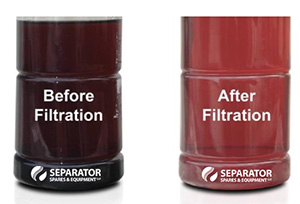
Diesel Fuel Polishing – Fuel polishing is a mechanical process (advanced-level filtration via a central processing unit) that removes water, sludge, asphaltenes, and other non-fuel contaminants, returning the fuel to its original condition so it is usable again. Quality fuel polishing can help remove water and solid contaminants in the tank (e.g., sludge and asphaltenes); however, it has limited ability to remove the actual microbial infestation (which may allow the sludge to return). For microbial contamination, a biocide is recommended.
Beating contamination through proactive diesel fuel management!
| Diesel Fuel Polishing Cart | Diesel Fuel Polishing (Single Pass Vessel) | Diesel Fuel Polishing (Recirculation Skid) |
 |  |  |
| A 3-in-1 Diesel Fuel Polishing Service Cart (DFS Cart) that efficiently removes water and bacterial growth from diesel fuel that can damage pumps and injectors. The mobile system polishes diesel fuel in storage tanks, as it is dispensed, or after it has been sitting unused in an engine/belly tank for an extended period. The compact, lightweight diesel fuel polishing cart can be maneuvered and operated by one person. The DFS Cart has audio/visual maintenance alarms and shutdown for clogged filter and high water level. | Diesel Fuel Polishing (single pass vessel) 851E filters utilize advanced coalescing technology to remove water and harmful particulates, ensuring delivery of clean diesel fuel and preventing costly damage and downtime. By efficiently eliminating contaminants, they extend component life and maintain diesel equipment performance. This diesel fuel polishing unit is ideal for avoiding revenue loss from fuel-related failures. | Diesel Fuel Polishing (recirculation skid) MS Series combines particulate removal and water separation to remove 100% of damaging water and maintain fuel cleanliness far exceeding industry standards. This packaged solution uses an integrated pump to continuously polish bulk storage tanks, ensuring fuel life and protecting critical engine components. |
Biocide – If microbial contamination is present, treat the fuel with a diesel fuel biocide. When using a biocide, you will need to separate or remove the dead particles from the fuel. Once a preventive plan is put in place, biocide is not necessary on an ongoing basis.
Protect Your Power, Prevent Downtime: Smart Diesel Fuel Management!
 By thoroughly understanding the mechanics of modern diesel fuel and how it affects fuel tanks and equipment, fleet managers can avoid damaging their equipment and ensure their generator system works properly when they need it most. Better diesel fuel management is the answer! Improve operational efficiency, cut fuel waste, and reduce fuel costs with a comprehensive fuel management system. This will result in significant cost savings over time.
Separator Spares & Equipment provides mobile fuel-polishing carts, stand-alone single-pass systems, recirculating diesel fuel-polishing systems, and in-line point-of-use diesel fuel-dispensing filters (at the fuel pump and based on fuel consumption). Depending on your diesel storage tank cleaning needs, we can provide a tailored solution to ensure compliance. Gain a competitive edge and stop contamination before a failure. Contact us today to ensure optimal fuel efficiency. Get a custom estimate for diesel fuel management and a diesel fuel polishing system.
Improve overall efficiency with precision diesel fuel quality management filtration systems!
To learn more about bulk fuel filtration systems, visit Bulk Fuel Filtration & Critical Fuel Polishing Systems.
To learn more about data center fuel filtration, visit Why Data Center Fuel Filtration is the Backbone of the AI Revolution.
To learn more about power plant oil filtration, visit Power Plant Oil Filtration: Optimizing Turbine Reliability with Kaydon Filtration.
To learn more about different types of fuel oil filtration, visit the Fuel Oil Filtration Systems page.
To learn more about engine filtration, visit Engine Filtration: Essential Fuel and Lube Oil Solutions for Peak Performance.
Stop Contamination before Failure: Get a Custom Diesel Fuel Management & Polishing Estimate!