

Power Generation Oil Filtration Systems | Turbine, Genset & Fuel Conditioning
 Separator Spares & Equipment supplies oil and fuel filtration systems purpose-built for every stage of power generation, from turbine oil conditioning and varnish mitigation to reciprocating engine lube oil filtration and standby diesel fuel purification. As an authorized distributor for GEA Westfalia Separator, Kaydon Filtration/Donaldson Facet, and IOW Group, we match the right oil filtration technology to your fluid system and duty cycle, not a single-brand solution, so your equipment stays clean, dry, and online.
Oil Filtration for Power Generation Facilities
All power generation assets, whether steam turbines, combustion turbines, hydroelectric units, or reciprocating gensets, have one thing in common: they cannot tolerate unplanned downtime. A forced outage costs more than just repair dollars. It costs lost generation revenue, penalty exposure for grid commitments, and, in standby/backup applications, the very reliability the equipment is meant to provide. Contaminated oil and fuel are among the most common, and most preventable, root causes of that downtime. Water ingress, particulate wear, and varnish formation degrade bearings, servo valves, and injection systems long before an operator sees a problem on a gauge. Continuous oil filtration for power generation applications is how power facilities keep assets online, protected, and ahead of scheduled and unscheduled maintenance.
Keeping turbines, gensets, and fuel systems clean, dry, and online!
Why Power Plant Oil Systems Require Specialized Filtration
 Power plant fluid systems require oil filtration strategies tailored to specific operating conditions, not generic one-size-fits-all solutions. A single power generation facility may operate multiple oil filtration systems in parallel, including turbine oil, hydraulic oil, gear oil, seal oil, transformer oil, and diesel fuel systems, each with unique ISO cleanliness requirements and distinct contamination risks.
Steam and combustion turbines operate under demanding conditions in which heat, moisture, and potential cooling water ingress can accelerate lubricant degradation and lead to water contamination. Turbine OEM studies have shown that elevated water levels can significantly reduce bearing reliability and service life. Combustion turbines face an additional challenge of varnish formation. These sub-micron oxidation byproducts can accumulate on servo valves, control components, and internal metal surfaces, restricting movement and causing operational issues before traditional oil analysis detects visible contamination.
Reciprocating gensets, the gas and diesel engines that make up peaking plants (peaker), combined heat and power (CHP) installations (cogeneration), and standby power systems, face the same wear-particle and soot loading found in any diesel or gas engine, but with continuous-duty run hours that accelerate oil degradation. Facilities holding stored diesel fuel for emergency generators face a fuel-quality problem that has nothing to do with the engine. Water, sediment, and microbial growth degrade diesel fuel sitting in a tank.
Because each of these systems fails differently, oil filtration for power generation is not a single product solution. It is a combination of oil filtration technologies, including centrifugal separation, coalescing, bypass filtration, and varnish removal systems, selected based on the specific fluid, contaminant, and duty cycle, making diesel fuel management critical.
Application-matched filtration for every fluid system in the plant.
Turbine Oil Conditioning: Eliminating Water, Particulates & Varnish
Turbine lubrication and control oil is the highest-consequence fluid system in most power plants, protecting the main turbine bearings, governor, and, on combustion turbines, servo valves that control fuel and airflow. Single-pass coalescing systems remove free water and emulsified water from turbine oil without heat or vacuum, typically reducing water content to below 100 ppm while pulling particulate cleanliness to ISO 15/13/11 or better. These systems scale from small industrial turbine sets up to large utility units and are sized to run continuously, both during normal operation and through outages, so the unit restarts on properly conditioned oil.
Combustion turbines pose an additional risk of sub-micron varnish precursors that standard oil filtration does not capture. Left unaddressed, varnish deposits on servo valves and bearing surfaces cause sticking and unscheduled trips. Dedicated varnish removal and mitigation systems strip existing varnish from the turbine oil and lubricated surfaces while preventing further buildup, extending time between inspections and reducing forced outage risk.
 For a full breakdown of turbine oil conditioning technology, including single-pass coalescing and polishing filtration, see Turbine Oil Filtration: The Key to Reliable Power and Lower Costs and our Kaydon Filtration power plant oil filtration guide. To understand varnish formation and removal in more depth, visit Varnish Mitigation.
For a portable cart system, the Donaldson Facet KLP Portable TURBO-TOC conditioning systems are rugged, heavy-duty oil filtration system that provides an easy solution for offline oil filtration services. Previously known as the Kaydon KLP Series, the Facet KLP Series is capable of meeting particulate ISO Cleanliness Code 15/13/11 and water removal of less than 100 ppm. It may be installed on a single reservoir or moved between multiple reservoirs.
Turbine reliability is directly linked to oil cleanliness!
Hydroelectric Oil Filtration: Wicket Gates, Governors & Bearings
Hydroelectric facilities operate their own set of critical fluid systems: turbine governor oil, wicket gate hydraulic oil, and bearing lubrication, all operating continuously in wet, high-humidity powerhouse environments. Failures of the wicket gate mechanism, turbine governor, and turbine bearings rank among the leading causes of forced outages at hydroelectric plants, and most of those failures trace back to water ingress, particulate contamination, or varnish. Continuous offline conditioning of governor and hydraulic oil protects these components, extends fluid service life, and reduces the premature equipment failures that drive unplanned outages at hydro facilities.
Donaldson Facet (formerly Kaydon Filtration) specializes in eliminating water ingression, particulates, varnish, and other harmful contaminants from lubricating oils and fluids. Donaldson Facet’s oil filtration solutions safeguard various components in hydroelectric power plants, including turbine governors, valves, bearings, and pumps.
Most Hydroelectric Equipment Failures Start with Contaminated Oil. Here’s How to Stop Them!
Reciprocating Genset & Gas Engine Lube Oil Filtration
Reciprocating engines, gas and dual-fuel gensets from OEMs like Caterpillar, EMD, Everllence, Hyundai Himsen, INNIO Waukesha, Jenbacher, MaK, MAN Engine, Perkins, Pielstick, and Wärtsilä power a large share of peaking, combined heat and power, and distributed generation capacity. Many standard OEM full-flow lube oil system filter elements have nominal filtration ratings of approximately 35–40 microns. These engines generate continuous soot, wear metal, and sludge loading under sustained run hours, and standard full-flow filters alone do not capture the finest particulate before it recirculates.
Bypass oil centrifuges solve this by continuously cleaning a slipstream of oil using centrifugal force rather than disposable filter media, thereby removing soot, sludge, and wear metals that standard filters allow to pass. GEA Westfalia separators and IOW Group centrifugal oil filters are both proven in power-generation gensets to extend oil drain intervals, reduce engine wear, and cut maintenance costs without adding disposable filter media.
 GEA Westfalia Separators help you improve your power plant’s lube oil system. GEA Westfalia lube oil treatment systems continuously remove water and other impurities. GEA Westfalia self-cleaning centrifuges, featuring the innovative GEA UnitrolPlus systems, automatically monitor the water level in the oil and the separation of solid residues around the clock. This technology guarantees maximum separation efficiency for various lube oils, ensuring your engine operates smoothly and efficiently.
 IOW Group bypass centrifuge filters provide superior lube oil cleaning. Efficient lube oil cleaning is critical for minimizing engine wear and damage, and ensuring consistent operation at peak performance. With engine oil pressure or an external pump, the IOW centrifugal bypass filters continuously clean a portion of the lube oil to remove soot, dirt, sludge, wear metals, and solid-contaminated particles. The IOW Group centrifuge filters increase oil life, reduce the need for frequent oil changes, prevent premature wear, and help engines perform at their best.
See our engine oil filtration system guide for platform-specific recommendations.
Oil filtration for power generation facilities designed to improve engine performance and reliability!
Diesel Fuel Polishing & Storage Conditioning for Standby Power
Standby power and data centers depend on stored diesel fuel that must perform reliably at a critical moment, often after sitting idle for months. Diesel fuel is not a static, shelf-stable asset; it degrades in storage. Water contamination through condensation, sediment, and microbial growth degrades stored diesel fuel over time. The resulting water, wax, varnish, and sludge can clog on-engine diesel fuel filters and cause engine damage. Small amounts of contamination reduce fuel oil quality, increase maintenance requirements, and put equipment at risk when dependability matters most. In an outage, clean diesel fuel is required when fuel consumption and engine load peak.
Where diesel fuel cannot be replaced on a regular cycle, ongoing conditioning is what preserves it. Bulk fuel filtration systems condition fuel during transfer and bunkering, while recirculation systems continuously polish fuel already in storage tanks.
Donaldson Facet fuel systems offer a range of flow rates and installation flexibility designed to meet diverse operational needs. Whether it is used for continuous bulk fuel conditioning or single-pass polishing during transfer, Donaldson Facet proves a complete, economical, and versatile solution. The Donaldson Facet Critical Fuel Systems (Kaydon CFS Series) combine advanced particulate removal and water separation technologies to remove 100% of damaging water and deliver ISO 15/13/11 cleanliness codes that far exceed the most stringent industry standards. The single-pass #2 diesel filtration system removes 100% of free water and emulsified water.
GEA Westfalia Separators help you optimize your power plant’s fuel line. If reciprocating engines are the heart of your power plant, the fuel line is what keeps them going strong. The same UnitrolPlus self-monitoring technology protects the fuel line as it does the lube oil circuit, continuously tracking water content and solids so fuel reaching the injectors meets specification. This technology guarantees maximum separation efficiency for various fuel oils, ensuring your engine operates smoothly and efficiently.
Learn more about our Data Center Fuel Polishing Requirements: Optimal Diesel Fuel Condition for Backup Power.
Rugged, heavy-duty industrial oil filtration systems!
Target ISO 4406 Cleanliness Codes Across Power Plant Fluids
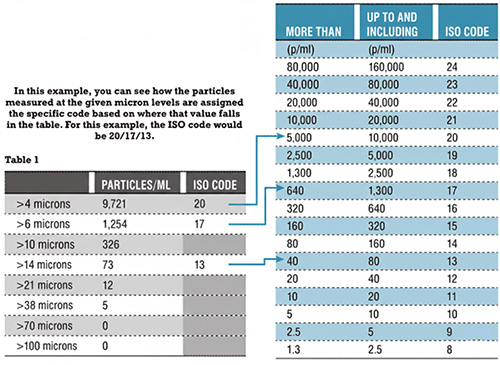 A modern power plant typically has to hold several fluids to different cleanliness codes at once. Turbine oil, hydraulic oil, gear oil, seal oil, and transformer oil each have their own oil cleanliness targets and protect different pieces of rotating or static equipment. Missing a target on any one of them shortens component life and raises the odds of an unscheduled trip. Matching oil filtration technology, flow rate, and micron rating to each fluid’s specific ISO 4406 cleanliness target keeps every system in the power plant, not just the turbine, running at its intended reliability level.
The ISO 4406 cleanliness code is expressed as a series of three (3) numbers, such as 15/13/11. Each individual number corresponds to the quantity of particles of a specific size range per milliliter of the fluid. The three particle size ranges measured are:
– First Number: Particles greater than or equal to 4 microns (µ) in size.
– Second Number: Particles greater than or equal to 6 microns (µ) in size.
– Third Number: Particles greater than or equal to 14 microns (µ) in size.
For background on how these codes are read and applied, see ISO 4406 Cleanliness Code Explained.
Reliable power generation oil filtration when the grid is depending on you!
Power Generation Filtration Brands & Solutions
Separator Spares & Equipment, LLC is an Authorized Distributor for the brands that power generation facilities rely on across every fluid system in the plant. GEA Westfalia centrifugal separators handle continuous lube oil purification and fuel conditioning for reciprocating gensets. Kaydon Filtration (now offered under the Donaldson Facet brand) supplies turbine oil conditioning, varnish removal, and diesel fuel conditioning technology purpose-built for steam, combustion, and hydroelectric power plants. IOW Group centrifugal oil filters and triple-screw pumps protect reciprocating engines and support equipment across the plant.
We do not sell a single-brand oil filtration solution for power generation or industrial environments. Instead, we match the right oil filtration technology to your oil system, fluid characteristics, contaminants, and duty cycle to meet or exceed the OEM oil cleanliness standards. Our solutions are engineered to handle a wide range of flow rates and oil viscosities, delivering high-efficiency filtration that helps remove contaminants, including particulate contamination, from new oil, in-service lubricants, and transformer oil applications. By selecting the appropriate filter element and optimizing oil flow throughout the oil reservoir and lubrication circuit, we help achieve optimal performance, reduce premature wear, and support extended oil drain intervals.
We prioritize oil filtration for power generation systems that demand long-term reliability, lower maintenance costs, and consistent equipment protection. Contact us today to discuss an oil filtration assessment for your power generation facility.
Reliable power generation begins with clean oil!
Frequently Asked Questions (FAQs)
What are fuel conditioning systems?
A fuel conditioning system for gas turbine fuel oils is a system that controls the supply of fuel from day tanks to the gas turbines. The functions of the fuel conditioning system will depend on the type of fuel oil and the specific conditions required at the gas turbine. The major functions are: pumping, heating, filtration, and metering. Heating requirements will vary depending on the viscosity of the fuel. For example, light crude oils are usually only heated to 65-80°C (149-176°F) to dissolve waxes. Heavy fuel oils (HFO) may require heating to 135-160°C (275-320°F) to reduce viscosity to an acceptable level for fuel atomization prior to combustion.
Normally, gas turbines burning heavy fuel oils or crudes will have a back-up supply of distillate required during start-up and shut-down operations. An important function of the fuel conditioning system is to select the desired fuel and precisely control the changeover in response to signals from the gas turbine operator. For low-viscosity crude oils, some gas turbine manufacturers have units that can start up and shut down directly on this type of fuel. In such cases, a fuel selection function will be unnecessary.
Why clean gas turbine fuel oil?
Gas turbines can burn a wide range of liquid fuels including distillates, crude oils, and heavy fuel oils. Regardless of the fuel utilized, it must be supplied to the gas turbine within a certain specification of cleanliness in order to prevent high-temperature corrosion, ash deposition, and fuel system problems.
High-temperature corrosion in gas turbines can result from the presence of trace metals in the fuel. These include sodium, potassium, and vanadium, which form compounds that melt on turbine hot-gas-path components, dissolve protective oxide coatings, and leave metal blade surfaces open to corrosive sulphidation attack.
Ash-forming impurities may be present in the fuel as oil-soluble organometallic compounds, water-soluble salts, and solids. Ashes formed during combustion may be deposited on hot-gas path components, causing a deformation of the optimum profile and a gradual decrease in the cross-sectional area of the gas path, resulting in a power loss of the gas turbine.
Fuel system problems can result from the presence of water and solids such as sand, rust, scale, and dirt, as well as micro-organisms. These cause clogging of filters and fuel distributors and erosion of fuel pumps.
 The GEA Westfalia fuel treatment process is designed to overcome these harmful effects. The GEA Westfalia system is based on mechanical separation of certain of these contaminants followed by the chemical inhibition of others. GEA Westfalia centrifugal purifiers are used for the simultaneous separation of water, water-soluble salts, and solids. Vanadium is present in fuel in a complex oil-soluble form and cannot be removed by centrifuging. When vanadium levels in the fuel exceed the gas turbine manufacturer’s recommendations, it will be necessary to inhibit the vanadium to prevent high-temperature vanadic corrosion. However, the use of magnesium-based additives has provided a commercially acceptable solution to this problem.
Oil Filtration for Power Generation
To learn more about standby and data center fuel systems, visit Data Center Fuel Filtration – Ensuring Uptime.
To learn more about fuel filtration, visit Fuel Filtration: Clean Diesel Guide to Protect Engines & ROI.
To learn more about diesel fuel filtration, visit Diesel Fuel Filtration Solutions for Marine, Power Generation, and Industrial Engines.
To learn more about oil filtration ROI and extending oil drain intervals, visit our Oil Filtration Return On Investment Calculator.
Power Generation Oil Filtration Systems | Turbine, Genset & Fuel Conditioning