

GEA Westfalia Separator

Separator Spares & Equipment, LLC is an Authorized GEA Mechanical Equipment US, Inc. (GEA Westfalia Separator Division) Distributor for the Gulf Coast region. Since 1893, GEA Westfalia has been building centrifugal separators that combine high separation and clarification efficiencies with high throughput, delivering maximum savings in energy, water, and disposal costs.
GEA Westfalia Separator
GEA Westfalia is the market leader in centrifugal separators. GEA separators are designed for liquid-based applications. Using centrifugal force, GEA Westfalia Separators separate suspensions comprising two or more phases of different densities. They can be used for liquid-liquid separation, for liquid-liquid-solid separation, or for liquid-solid separation.
GEA Westfalia centrifugal separators are used in thousands of applications by nearly every industry. This includes dairy processing, food & beverage, marine, oil & gas, power, chemical, pharma, farming, and in water and wastewater management. GEA Westfalia marine products are used in a variety of applications, including:
- Bilge Water Treatment – Exceeding IMO standards, protecting seas and oceans.
- EGR Wash Water Treatment – Effective method of reducing nitrogen oxide (NOx) emissions on marine vessels.
- Fuel Oil Treatment – Purifying fuel oil for peak engine performance.
- Lube Oil Treatment – Efficient oil treatment for long-lasting engine protection and reducing engine wear.
- Heat Recovery – Compact solution designed for optimal energy recovery.
- Hydraulic Oil Treatment – Continuous treatment to remove contaminants to protect hydraulic systems.
- Scrubber Water Treatment – Ensuring compliance with MARPOL Annex VI with GEA SOx Separator.
- Sea Water Desalination – Fresh water generation by evaporation.
- Slop Water Treatment – Centrifuges ensure efficient onsite/offshore treatment.
- Spare Parts and Service Solutions throughout the entire life cycle.
GEA Westfalia separators are innovative solutions for maximum performance, profitability, and environmental protection. GEA Westfalia separators use bowl disc technology. They operate continuously with respect to the discharge of the liquid phases. In respect of the solids discharge, they work either discontinuously (solid bowl centrifuges, which must be stopped so that the collected solids can be removed by hand), semi-continuously (self-cleaning separators), or fully continuously (nozzle-type separators). GEA separators are available with different drive types: gear drive, belt drive, direct drive, and integrated direct drive.
Separator Spares & Equipment is your trusted long-term partner for GEA Westfalia Separator centrifugal separators and spare parts. We are committed to ensuring a cost-efficient operation while maintaining safety and reliability.
GEA Westfalia Separator
Centrifuges & Separation Equipment
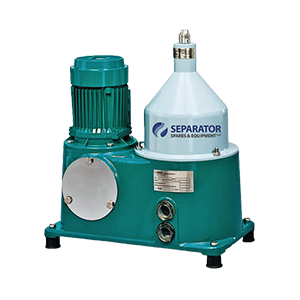
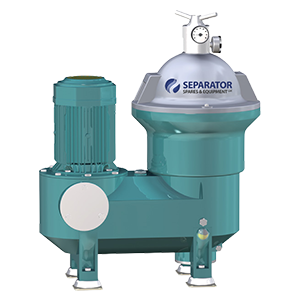
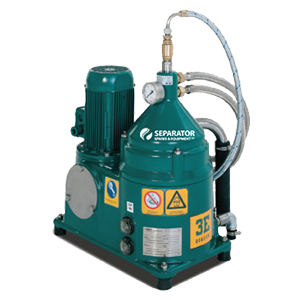
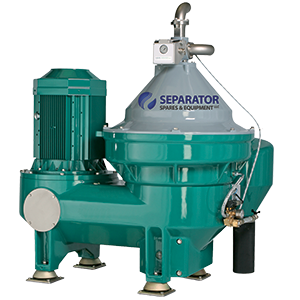
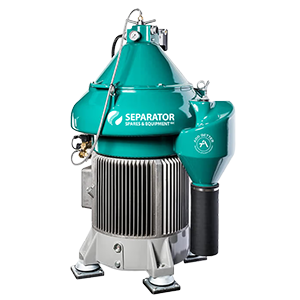
Bilge Water Treatment
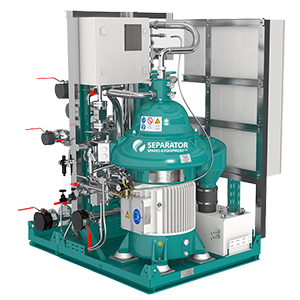 The GEA bilge Separator is a revolutionary solution that delivers maximum performance per square meter, a simplified service concept, and intelligent connectivity.
Unlike conventional bilge systems, the GEA bilge Separator achieves 15 ppm oil content across all performance classes, without additional adsorption filters or chemicals. This is made possible by an optimized bowl-and-disk stack design, which ensures gentle product feed and enhanced clarification.
GEA Westfalia Separator: Engineered bilge water treatment to exceed IMO Standards
GEA Bilge Separator Key features include:
– Integrated direct drive for higher efficiency
– Compact design with a small footprint
– Reduced energy consumption
– Easy-to-replace drive system
– Residual oil content below 15 ppm (without additional filters)
– Residual oil content below 5 ppm (with an optional adsorption filter)
– Continuous monitoring of the overboard valve (GEA SafetyMaster)
– Seamless integration with GEA SafetyMaster (system-integrated or stand-alone)
– MTP-ready for advanced connectivity
GEA Bilge Separator Model Numbers:
– GEA bilge Separator 200 (200 l/h @ 60°C)
– GEA bilge Separator 600 (600 l/h @ 85°C)
– GEA bilge Separator 1200 (1,200 l/h @ 85°C)
– GEA bilge Separator 2500 (2,500 l/h @ 85°C)
– GEA bilge Separator 5000 (5,000 l/h @ 85°C)
EGR Wash Water Treatment
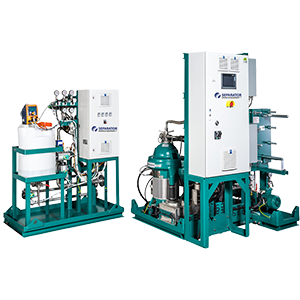 As global emission regulations become increasingly stringent, ship operators are required to reduce nitrogen oxides (NOx), sulfur oxides (SOx), and particulate emissions. Exhaust Gas Recirculation (EGR) is an established technology for NOx reduction, enabling compliance with IMO Tier III requirements across a wide range of fuels, including heavy fuel oil, low-sulfur fuels, LNG, and methanol.
During the EGR process, a portion of the exhaust gas is washed and recirculated, generating wash water containing soot, acidic compounds, sulfur residues, and fine particulates. This water must be treated before discharge to prevent environmental impact and to meet regulatory requirements.
GEA Westfalia Separator: EGR wash water treatment for compliant discharge
GEA EGR wash water treatment systems are designed to purify bleed-off water from EGR circuits, ensuring compliance with IMO MEPC.307(73) and, where required, MEPC.259(68). High-efficiency centrifugal separation removes solids and contaminants, allowing the treated water to be safely discharged overboard in accordance with applicable regulations.
The compact, integrated design supports continuous operation with low energy consumption and minimal maintenance requirements. Automatic sludge handling and direct-drive technology ensure reliable performance and stable separation efficiency under varying operating conditions, supporting compliant and efficient EGR operation onboard marine vessels.
GEA EGR Wash Water Treatment Model Numbers:
– GEA NOx Separator 2500 (capacity of 2,500 l/h)
– GEA NOx Separator 5000 (capacity of 5,000 l/h)
– GEA NOx Separator 10000 (capacity up to 10,000 l/h)
Integrated Bilge Water Treament and EGR Wash Water Treatment
The GEA bilgEGR solution is a combined treatment system designed to handle both oily bilge water and EGR bleed-off water within a single separator module. By integrating these two treatment functions into one unit, the system simplifies onboard installation while ensuring compliance with applicable environmental discharge regulations.
The solution has been approved by DNV and is engineered to meet the relevant IMO requirements for bilge water and EGR wash water treatment. This integrated approach reduces equipment complexity, supports efficient vessel operation, and enables reliable, compliant discharge under normal operating conditions.
GEA bilgEGR Solution Model Numbers:
– GEA bilgEGR Solution 1200 (capacity of 1,200 l/h)
– GEA bilgEGR Solution 2500 (capacity of 2,500 l/h)
– GEA bilgEGR Solution 5000 (capacity of 5,000 l/h)
Fuel Oil Treatment
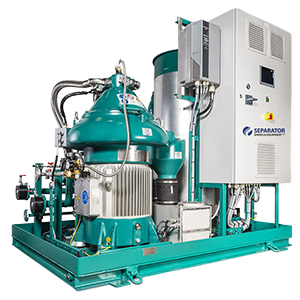 Fuel quality is critical to the safe, efficient, and reliable operation of gas turbines and engines. Even trace amounts of water, solids, salts, or catalytic fines can lead to corrosion, fouling, accelerated wear, and unplanned downtime. GEA fuel oil treatment systems ensure consistent compliance with OEM fuel cleanliness requirements for gas turbines and engines, regardless of whether diesel oil, marine diesel oil (MDO), crude oil, or heavy fuel oil (HFO) is used.
GEA Westfalia Separator: Protecting engines with advanced fuel oil treatment
During transport and storage, distillate fuels such as diesel oil are frequently contaminated by water, rust, sand, and scale, often exceeding allowable limits. Crude oil and HFO present additional challenges, including high viscosity, wax content, low flash points, and elevated concentrations of sodium, potassium, vanadium, and abrasive solids. Effective fuel oil treatment requires controlled heating (when needed), explosion protection (where applicable), and high-efficiency separation.
GEA fuel oil treatment solutions utilize centrifugal separation technology (centrifugal force), configured as single-stage or two-stage systems depending on fuel type and contamination level. By delivering clean, specification-compliant fuel, GEA fuel oil treatment systems protect critical components, including turbine blades, injectors, pistons, and cylinder liners. The result is reduced corrosion and fouling, longer maintenance intervals, improved operational reliability, and lower lifecycle costs across power generation, maritime, and industrial applications.
Lube Oil Treatment
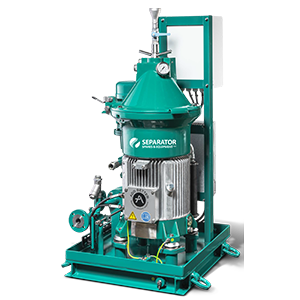 Lube oil needs to have water and other impurities removed continuously. Lube oil treatment is the only reliable way to prevent symptoms of premature wear and damage to critical components. Lube oil treatment extends the service life of the lube oil.
The GEA Westfalia ecomarine separator is a manual cleaning centrifuge engineered for efficient lube oil treatment. This separator significantly reduces energy costs and offers a more economical and environmentally sustainable alternative to lube oil filtration systems.
Lube Oil Treatment for Diesel Engines
During normal diesel engine operation, lubricating oil is continuously exposed to contamination. Wear from rotating and sliding components introduces fine metallic particles into the oil. In addition, combustion byproducts, condensed moisture, and decomposition residues accumulate in the lube oil sump over time.
GEA Westfalia Separator: Lube oil treatment for engines, engineered for reliability
The lubricant itself may also contain acidic compounds, which, when combined with catalytic contaminants, accelerate chemical degradation and lead to premature oil ageing. In diesel engines, combustion residues and non-combustible particles originating from the cylinder can migrate into the lubricating oil circuit. If left untreated, these contaminants directly contribute to increased engine wear on critical components, including bearings, pistons, and cylinder liners, ultimately reducing engine reliability and service life.
Lube Oil Treatment for Gas Turbines
In gas turbine power plants, lubricating oil is essential for protecting rotating components and maintaining stable, efficient operation. During service, the oil gradually becomes contaminated with fine metallic wear particles, airborne dust, moisture, and thermal decomposition byproducts. These contaminants accumulate in the lube oil sump and accelerate oil ageing, particularly when acidic compounds interact with catalytic impurities.
GEA Westfalia Separator: Lube oil treatment for gas turbines, ensuring stable operation
Water ingress represents a significant operational risk. When not effectively removed, moisture promotes oxidation and microbial activity, resulting in premature oil degradation and increased maintenance requirements. If left unaddressed, these conditions can adversely affect turbine reliability, shorten component life, and lead to unplanned downtime.
Heat Recovery
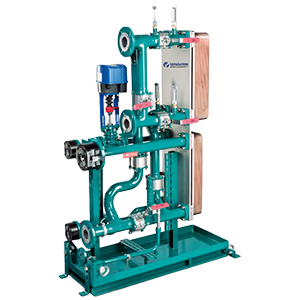 Cost savings have become a very attractive proposition on board ships as operating costs have risen sharply. The overall economy and reduced fuel consumption are essential to becoming more competitive and operating a green, environmentally friendly vessel.
In traditional lube oil treatment systems, the energy required to heat the lube oil upstream of the centrifugal separator is lost because, after separation, the hot oil is returned to the engine sump tank for cooling by the engine cooling system. As an integral part of the lube oil treatment system in compact unit design, the GEA Westfalia Separator EnergyMaster recovers part of this energy. The recovery heat exchanger is the heart of this system and is designed as a brazed plate heat exchanger.
GEA Westfalia Separator: Heat recovery engineered for sustainability and efficiency
The GEA Westfalia Separator EnergyMaster is available as
– An integrated part of the heater unit, HRU
– A retrofit package for existing heater units
The GEA Westfalia Separator EnergyMaster saves energy on the separator preheater system, and the same engine is saved on the engine lube oil cooling system.
Hydraulic Oil Treatment
Continuous hydraulic oil treatment is recommended to remove contaminants, such as water, dirt, and metal particles, which can cause corrosion, blockages, and system malfunctions. Using centrifugal force, GEA Westfalia Separators are perfect for this continuous treatment process, and can remove metal particles down to 1 μm, organic particles down to 5 μm, and can achieve a purity of up to 99.99% by volume.
GEA Westfalia Separator: Hydraulic oil treatment for reliable system performance
With cleaner hydraulic oils and longer oil-change intervals, industry and agriculture benefit from longer component service life, reduced machine downtime, and lower oil purchasing and disposal costs.
Sea Water Desalination
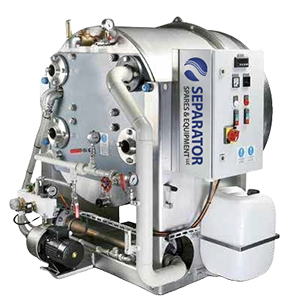 Storing large volumes of fresh water onboard is costly and consumes valuable space. GEA seawater desalination systems provide a shore-independent freshwater supply by converting seawater into potable water, with capacities of 5–30 tons per day, meeting the daily needs of container ships, LNG carriers, bulk carriers, and general cargo vessels.
GEA Westfalia Separator: Desalination systems engineered for marine and offshore operations
GEA Sea Water Distillers (SWD) use vacuum distillation to separate water from salt and impurities. Seawater is heated under vacuum, typically using waste heat from the main engine jacket water, causing partial evaporation. A combined air-and-brine ejector removes brine and non-condensable gases while maintaining the required vacuum level. The generated vapor is cleaned through a demister and then condensed in a titanium plate condenser cooled by incoming seawater.
The distillate quality is continuously monitored by a salinity measuring unit. If the salt content exceeds the set threshold (commonly 2–10 ppm), the water is automatically returned to the evaporator. Treated water can then be stored and, if desired, re-hardened to restore its mineral content for domestic use.
All seawater-contacting components are manufactured from corrosion-resistant materials, including titanium, stainless steel, and high-performance polymers, ensuring long-term durability and reliable operation. This efficient desalination process reduces reliance on stored freshwater, supports continuous onboard water production, and improves operational autonomy for marine vessels.
Spare Parts & Service Solutions
 Separator Spares & Equipment supports customers throughout the entire lifecycle of their equipment, combining expertise with the latest innovations to ensure continued performance, reliability, and regulatory compliance. We provide fast, efficient maintenance, whether preventive, predictive, or corrective, to minimize unplanned downtime and maintain continuous production.
GEA Westfalia Separator Spare Parts and Service Solutions
We provide spare parts to preserve the designed performance and safety of GEA centrifuges, helping to reduce downtime and maximize productivity. As technology, regulations, and market requirements evolve, Separator Spares & Equipment works with customers to upgrade and optimize equipment, improving efficiency, lowering operating costs, and extending service life.
Our comprehensive service solutions go beyond routine maintenance, delivering end-to-end support and flexibility to meet changing demands and sustain long-term operational excellence. For GEA Westfalia Separator spare parts and GEA Westfalia Separator service, contact Separator Spares & Equipment.
Brief History of GEA Westfalia
1893 Franz Ramesohl and Franz Schmidt founded Ramesohl & Schmidt oHG in Oelde, Germany, producing a hand-operated milk centrifuge called the “Westfalia”.
1895 Received a patent for the spiral disc stack, which significantly increased the separation area within the centrifuge bowl.
1994 Westfalia Separator was acquired by and incorporated into the GEA Group.
1997 Launched the C-Generation marine separators featuring the patented Hydrostop desludging system and Softstream liquid entry.
2008 Launched the “eagleclass” (OSE series) self-cleaning mineral oil separators.
2012 Separator Spares & Equipment, LLC signed a distributor agreement with GEA Mechanical Equipment US, Inc., GEA Westfalia Separator Division.
2018 Launched the GEA marine Separator with an Integrated Direct Drive (OSF series).
2023 Separator Spares & Equipment, LLC was honored with the prestigious GEA Westfalia Partnership Award.
2026 Separator Spares & Equipment completes GEA Westfalia Separators’ Marine Service Training.
Industry Pages
Similar Products

