

Why Data Center Fuel Filtration is the Backbone of the AI Revolution
 In the high-stakes world of Artificial Intelligence (AI), most discussions revolve around compute density, GPU clusters, and advanced cooling technologies. Yet there is a critical physical reality that is often overlooked: the reliability of an AI data center depends on the quality and stability of its standby diesel fuel. When power disruptions occur, the performance of data centers’ backup diesel generators is determined not only by mechanical readiness but also by the condition of the diesel fuel stored onsite.
As AI-driven workloads continue to push data center uptime requirements toward near-absolute reliability, the risk profile of emergency power systems has fundamentally changed. When a generator set (genset) starts during a power event, it is no longer simply providing backup power; it becomes the operational lifeline for the entire data center. Any failure in the fuel system, whether due to contamination, water, or fuel degradation, can quickly lead to costly downtime.
This blog explores the technical importance of proper data center fuel filtration, the vulnerabilities associated with long-term storage, and why advanced diesel fuel filtration systems are essential for maintaining the reliability required to support data center AI infrastructure and achieve true 99.999% availability.
Protect Your Generators. Secure Your Uptime with Advanced Data Center Fuel Filtration!
The “Zero Failure” Mandate of the AI Data Center Era
Traditional enterprise data center operations could occasionally withstand a “hiccup” during a power transition. AI data centers cannot. The computational intensity of large language model (LLM) training means that even a millisecond of power instability can cause “checkpoint” failures, leading to days of lost progress and millions in operational losses. According to industry benchmarks, the cost of downtime in a Tier IV data center can exceed ~$14,000 per minute. If your backup diesel generators fail to start, or worse, shut down five minutes into a power outage due to diesel fuel contamination, the financial repercussions are catastrophic.
The Sensitivity of Modern Data Center Generators
Modern data center generators often use high-pressure common-rail (HPCR) fuel systems to meet Tier 4 emission standards, with injection pressures reaching 30,000–40,000 psi. At these extreme pressures, even minor diesel fuel contamination can cause significant damage:
– Microscopic Particulates can erode injector tips, reducing precision and shortening injector life.
– Free and emulsified water can vaporize inside the injector, creating localized micro-explosions that damage components.
– Fuel degradation products, like gums and varnishes, can clog ultra-fine tolerances, restricting flow and threatening generator startup.
Data Center Fuel Filtration | Clean Fuel, Reliable Power — Every Time.
The Three (3) Enemies of Stored Diesel Fuel
Diesel fuel is a perishable, organic fluid that begins to change the moment it leaves the refinery. Exposure to oxygen, moisture, temperature fluctuations, and storage conditions gradually alters its chemical stability and cleanliness. In environments such as data centers, hyperscalers, and cloud computing, where fuel may remain in bulk storage tanks for 12 to 24 months or longer, these changes can accumulate, degrading diesel fuel quality.
During prolonged storage, three primary threats typically emerge, compromising fuel reliability and backup generator performance. Understanding and managing these risks is essential to ensure that diesel storage tanks remain clean, stable, and ready to perform when critical power systems are called upon.
1. Microbial Contamination (The “Fuel Bug”)
Microbial contamination, commonly referred to as the “fuel bug,” occurs when bacteria, yeast, and fungi grow at the interface between diesel fuel and free water in a storage tank. These microorganisms feed on hydrocarbons in the fuel and reproduce rapidly in the presence of moisture. As they metabolize the fuel, they produce organic acids and a thick biomass that settles in the tank as sludge. Over time, this contamination can degrade diesel fuel quality, accelerate corrosion within tanks and piping, and create significant operational issues.
 This microbial sludge is one of the most common causes of sudden filter plugging in diesel fuel systems. When fuel sits untreated in storage tanks, the biomass accumulates along the bottom of the tank and often goes unnoticed. During generator startup or high-demand operation, increased fuel flow and suction can disturb these deposits, drawing sludge into the diesel fuel filtration system. The result is rapid diesel fuel filter blockage, restricted fuel flow, and in severe cases, engine shutdown within minutes. Proper diesel fuel maintenance, including water removal, periodic fuel filtration, and routine tank monitoring, is essential for preventing microbial growth and maintaining reliable engine performance.
2. Water: The Catalyst for Failure
Water is one of the most damaging contaminants that can enter a diesel fuel storage system. It typically infiltrates tanks through atmospheric venting, temperature-driven condensation, or contaminated fuel deliveries. Once inside the system, water can exist in three forms: dissolved, emulsified, and free (settled) water.
Free water (settled water) accumulates at the bottom of storage tanks, creating an ideal environment for microbial growth. This interface between water and fuel becomes the breeding ground for bacteria and fungi that produce sludge and accelerate fuel degradation.
Emulsified water consists of extremely fine water droplets suspended within the diesel fuel. Because these droplets are chemically stabilized within the diesel, they are far more difficult to remove and can pass through basic separation equipment. Emulsified water reduces the lubricity of the fuel and can accelerate wear in high-pressure fuel pumps and injection systems, potentially leading to costly equipment damage.
3. Oxidation and Particulate Accumulation
Over time, diesel fuel naturally reacts with oxygen in a process known as oxidation. This reaction causes unstable fuel molecules to break down and form heavier compounds, including asphaltenes, dark, insoluble particles that resemble fine sand or soot. As these oxidation byproducts accumulate, they increase the particulate load within the fuel and contribute to sediment formation in storage tanks.
When these particles combine with other contaminants—such as rust from tank walls, scale from piping, and dust introduced during fuel deliveries—the overall contamination level can rise quickly. Modern diesel injection systems operate with extremely tight tolerances, so even small amounts of abrasive particulate matter can damage injectors, accelerate wear in fuel pumps, and lead to costly engine performance issues.
Data Center Fuel Filtration | Water Out. Particles Gone. Performance Assured.
Why Advanced Diesel Fuel Filtration Matters? The Kaydon Filtration Coalescing Advantage
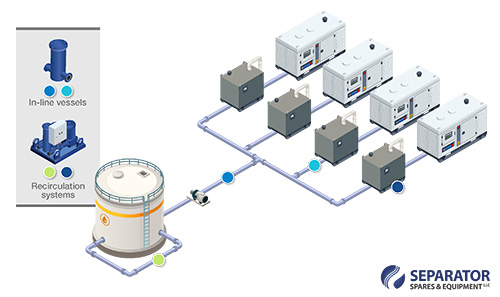
Kaydon Filtration diesel fuel filtration systems go far beyond simple “barrier” filters. While many competitors rely on basic paper elements, Kaydon leverages decades of liquid-conditioning engineering to deliver a multi-stage diesel fuel filtration system designed for maximum fuel reliability. Each stage is optimized to remove particulates, separate water, and maintain the chemical stability of diesel fuel, protecting diesel generators and high-pressure fuel systems from premature wear and failure.
Data Center Fuel Filtration | Fuel Polished for Precision, Engineered for Reliability!
The Physics of Coalescence
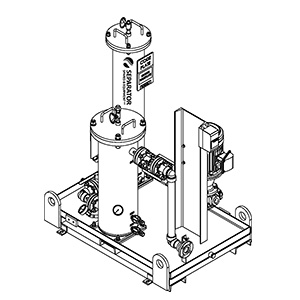 The Kaydon FC Series and Kaydon Critical Fuel Systems (CFS Series) incorporate advanced particulate and water separation media engineered to remove suspended solids and free/emulsified water from diesel fuel. Their coalescing/separator elements are designed to bring dispersed water droplets together and then divert the separated water from the fuel stream, helping deliver clean, dry fuel that meets stringent cleanliness and dryness targets.
Typical filtration process (based on element function):
Particulate Removal: Kaydon high‑efficiency microglass media captures fine solid contaminants in diesel fuel, protecting high-pressure injectors and other critical engine components from damage while ensuring reliable generator performance.
Water Coalescing and Separation: Kaydon coalescer media gather microscopic water droplets into larger, heavier droplets, while the separator media prevent these droplets from re‑entering the fuel stream. This combined process efficiently removes water from diesel fuel, protecting high-pressure injection systems and ensuring reliable generator operation.
When properly sized and maintained, these hyperscalers and data center fuel filtration systems can reduce water content in diesel fuel to levels below 100 ppm, providing protection against microbial growth, corrosion, and fuel instability, and supporting reliable generator startup and operation under critical load conditions. Better data center fuel filtration will improve fuel quality, help data center operations avoid disruptions, and help data center operators maintain reliable backup power.
Data Center Fuel Filtration | Best Fuel Filtration for Hyperscalers!
Meeting the ISO 4406 Cleanliness Standard
The ISO 4406 standard is the internationally recognized method for expressing the particulate cleanliness of diesel fuel. It reports three numbers representing the number of solid particles greater than 4 µm, 6 µm, and 14 µm per milliliter of fluid. In ISO 4406, each reduction of one code number corresponds roughly to a halving of particle counts at that size range.
Fuel Condition Typical ISO 4406 Code Results Stored fuel as delivered (unfiltered) ~22/21/18 Very high particulate load with a high risk of injector seizure ASTM D975 (min. standard) 18/16/13 Often common OEM acceptable requirement Kaydon Filtration CFS Series (Fuel Polishing Skids) 15/13/11 The AI Data Center Fuel Filtration Gold Standard
Achieving a lower ISO 4406 code means fewer solid contaminants capable of damaging high‑pressure common‑rail injectors and other precision components. Diesel fuel polishing and conditioning systems are used to reduce particulate contamination in bulk storage and supply lines so that clean, conditioned fuel meets or exceeds engine and OEM cleanliness expectations before it reaches critical equipment. Kaydon’s Critical Fuel Systems can achieve an ISO 4406 code of 15/13/11 under standard polishing conditions, representing a significantly cleaner fuel than common storage fuel.
Data Center Fuel Filtration | Don’t let dirty diesel fuel be the “single point of failure” in your AI strategy.
Conclusion: Data Center Fuel Filtration Reliability is a Choice
 In the AI data center era, there is no room for “best guesses” regarding infrastructure. Your diesel generators are the last line of defense against power outages, and your stored diesel fuel is the lifeblood of those generators. As an Authorized Kaydon Filtration Distributor, Separator Spares & Equipment not only provides diesel fuel filtration solutions but also gives data center and hyperscalers operators certainty and peace of mind.
Backup power in data centers and hyperscalers is essential to keep them running smoothly during power outages. By implementing Kaydon’s world-class coalescing and polishing technology, you ensure your data center is ready for the unexpected, protecting your hardware, data, and bottom line. Don’t let dirty diesel fuel be the “single point of failure” in your data center AI strategy.
Ready to upgrade your facility to the Kaydon Filtration “industry standard” data center fuel filtration solution? Contact Separator Spares & Equipment for a custom data center fuel oil filtration system specification tailored to your data center’s requirements.
To learn more about Power Plant Oil Filtration, visit Power Plant Oil Filtration: Optimizing Turbine Reliability with Kaydon Filtration.
To learn more about Bulk Fuel Filtration Systems, visit Bulk Fuel Filtration Systems | High-Efficiency Fuel Conditioning.
Data Center Fuel Filtration | Protect Your Generators. Secure Your Uptime.
Data Center Fuel Filtration Frequently Asked Questions (FAQ)
Can I integrate my fuel polishing system into my building management system (BMS)?
Yes. Kaydon Critical Fuel Systems (CFS) are equipped with Modbus or Ethernet communication options, allowing real-time monitoring of system performance, fuel quality, and filter status. This data can be integrated into a data center’s building management system (BMS) or centralized monitoring platform to provide alerts, track maintenance needs, and ensure backup generators always have clean, ready-to-use diesel fuel.
What is the ROI of a fuel polishing system?
The return on investment (ROI) for a Kaydon Critical Fuel System (CFS) comes from preventing costly diesel generator failures, extending fuel quality and engine life, and reducing maintenance downtime. By continuously removing water, particulate contamination, and microbial growth from diesel fuel, Kaydon CFS systems help ensure that backup generators start reliably and operate efficiently when needed.
While exact ROI varies by facility size, diesel fuel volume, and emergency generator criticality, typical benefits include:
– Reduced risk of injector or pump damage, which can cost tens of thousands of dollars per event.
– Extended fuel storage life, avoiding premature disposal or reconditioning of stored diesel fuel.
– Lower maintenance and downtime costs, since clean fuel minimizes equipment wear and reduces emergency service calls.
In AI-critical and other high-availability data centers, these factors translate to avoided costly downtime and continuous operation (uninterrupted operation), which is often the most significant component of ROI.
Data Center Fuel Filtration | Protect Your Generators. Secure Your Uptime