

Fuel Polishing Requirements for Data Center Backup Power
The Real Reason Your Backup Generator Power is at Risk
 A data center can have redundant diesel generators, multiple diesel fuel tanks, and rigorous maintenance schedules, yet one overlooked issue can still put uptime at risk: degraded diesel fuel. Over time, stored diesel fuel tanks collect water, sediment, and microbial growth, often called “fuel algae,” which contaminate the diesel fuel and slowly degrade its quality. The danger arises when the power fails, and backup diesel generators must start without hesitation. Contaminated diesel fuel can clog generator injectors, reduce engine performance, and cause unexpected engine failures at the exact moment the facility most depends on backup power. That is why diesel fuel integrity is not a small maintenance detail; it’s a core part of reliable backup power planning.
Maintaining diesel generator readiness for uninterrupted power availability during grid failures by eliminating water contamination, microbial growth, sludge, oxidation residues, varnish, and particulate impurities that can degrade engine performance is critical. Meeting the regular fuel polishing requirements for data center backup power means treating stored fuel as a living system that requires ongoing care. A critical fuel polishing system skid, such as the Donaldson Facet fuel polishing system, continuously removes contaminants and maintains clean diesel fuel, supporting the strict uptime expectations of Tier III and Tier IV data center environments.
Fuel polishing is highly effective at restoring fuel quality and ensuring your generator performs reliably!
Why Today’s Diesel is a Breeding Ground for Trouble
Today’s diesel fuel delivers strong performance, but its chemistry also poses new challenges for long-term storage. Ultra-Low Sulfur Diesel (ULSD) is more sensitive to contamination because the sulfur compounds that once helped slow microbial growth have been reduced. Add moisture from condensation inside diesel fuel storage tanks, and it creates the perfect setting for bacteria and fungi to grow. The problem usually does not appear when everything is running smoothly. It hides quietly in the fuel tank, building up layer by layer. Over time, this growth can create sludge, sediment, and what many facilities technicians call “diesel bug.”
When a generator finally needs to carry the load during an outage, contaminated diesel fuel moves through the system, clogs filter elements, restricts flow, and damages injectors. For data center generator technicians, this is a serious reliability concern. Backup diesel generators are the last line of defense when utility power drops, and poor fuel quality can turn a ready-to-run system into an unexpected weak point. That’s why data center fuel conditioning has become a key part of maintaining critical infrastructure. A properly designed critical fuel polishing system skid helps remove water and contaminants before they become an emergency, keeping stored fuel cleaner and more dependable when every second matters.
To make matters worse, many diesel blends contain a percentage of biodiesel, which brings its own set of challenges. Biodiesel is hygroscopic, meaning it naturally absorbs moisture from the surrounding air, like a sponge sitting inside your fuel system. That moisture can enter the tank through condensation, normal tank breathing cycles, or even during diesel fuel delivery. Because water is heavier than diesel fuel, it settles at the bottom of the storage tank, creating a distinct layer where the two fluids meet.
That boundary between water and diesel fuel is where trouble starts. It creates the ideal environment for microbial growth, often referred to as “fuel algae,” which can produce sludge and contaminants that threaten filters, fuel lines, and generator injectors. For data centers, this hidden layer can become a major risk when backup power is needed most.
The Myth of “Fuel Algae”
The term “fuel algae” is widely used in the industry, but the problem usually isn’t actual algae. Diesel fuel stored in tanks does not grow green pond-like algae. What technicians typically see is a mix of bacteria, fungi, and other microorganisms that thrive at the fuel-and-water interface inside a storage tank. These microbes create dark, slimy deposits and sludge that resemble organic growth.
Over time, that contamination can break loose and travel through the diesel fuel system, restricting fuel filters, affecting fuel flow, and clogging generator injectors when backup power is called into action. This is why data center fuel conditioning focuses on prevention rather than waiting for a system failure. A critical fuel polishing skid continuously removes water, sediment, and microbial contaminants, helping maintain clean diesel fuel and protect emergency power systems. A backup generator is only as reliable as the diesel fuel flowing into it.
The Silent Killer: Asphaltenes and Particulate Matter
Unlike microbial contamination, which is easy to see, two silent killers in the diesel fuel tank are asphaltenes and particulate matter. These two diesel fuel contaminants will slowly reduce reliability without causing obvious warning signs. As diesel fuel ages, its chemical stability changes. Heavy hydrocarbon compounds called asphaltenes can separate from the fuel and form sticky deposits. These sticky deposits cling to tank surfaces, fuel lines, fuel filters, and critical diesel engine components.
Particulate matter creates another challenge. Rust, dust, tank debris, and degraded diesel fuel particles circulate through the system, restricting fuel flow and placing extra strain on diesel fuel filtration components. During normal operation, the impact may seem minor. During a power outage, even a small restriction can become a major issue when a generator needs a steady, clean diesel fuel supply immediately.
For data center facility technicians, this is why fuel polishing requirements for backup power extend beyond simply keeping diesel fuel tanks full. Diesel fuel must remain clean, stable, and ready for the moment demand spikes. A critical fuel polishing system skid continuously removes suspended contaminants and maintains fuel integrity, reducing the risk of hidden deposits that can cause costly interruptions in backup power performance.
Navigating the Compliance Jungle
 Industry standards and facility requirements place heavy expectations on critical infrastructure teams. Data centers operating under frameworks such as Uptime Institute Tier III and Tier IV standards are built around availability, redundancy, and operational discipline. While these standards focus broadly on uptime, fuel quality management is an important piece of the reliability puzzle. Organizations like the Uptime Institute, NFPA, and ASTM do not care about your excuses when a generator fails; they care about your documentation.
- ASTM D975: The North American standard specification for diesel fuel oils. It outlines the acceptable limits and testing methods for parameters such as flash point, viscosity, sulfur content, and cold-flow properties to ensure optimal diesel engine performance.
- NFPA 110: This standard dictates that emergency power systems must be maintained to ensure reliability. It specifically requires annual testing of the fuel quality using appropriate ASTM standards to verify full compliance. If the fuel fails testing, necessary corrective actions must be implemented.
- Uptime Institute: Tier III and IV standards mandate continuous site availability. If your operational strategy relies solely on annual tank cleanings rather than proactive fuel quality management, you compromise critical concurrent maintainability & fault tolerance.
Summary of Key Diesel Fuel Standards
| Standard | Focus Area | Key Requiments |
| ASTM D975 | Fuel Specifications | Max 0.05% water and sediment content |
| ISO 4406 | Particulate Cleanness | Strict particle counts (e.g., 18/16/13) |
| NFPA 110 | System Reliability | Annual fuel quality testing & remediation |
To satisfy these standards, you need a verifiable, automated way to keep your fuel clean. Manual fuel testing is a snapshot in time. A sample taken on a Monday might look fine, but a heavy rainstorm on Tuesday could compromise a faulty vent seal, introducing gallons of water into your tank. The challenge is that stored fuel does not stay exactly the same after delivery. Water intrusion, microbial growth, sediment, and chemical degradation can slowly reduce fuel quality over time. That means routine fuel testing, tank maintenance, and proper data center fuel conditioning are not just maintenance tasks; they are part of a larger reliability strategy.
Meeting fuel polishing requirements for data center backup power requires a consistent approach. A critical fuel polishing skid helps facilities maintain cleaner diesel fuel by continuously filtering contaminants and removing water before they create problems. It is a practical layer of protection that helps turn diesel fuel storage from a passive asset into a managed reliability system.
Because when an emergency arrives, compliance reports won’t start the generator – clean, conditioned diesel fuel will!
Why Standard Diesel Fuel Filtration Alone Fails the Test
Standard fuel filtration is important, but it is only one piece of the diesel fuel reliability puzzle. Most onboard generator filters are designed to protect the engine during operation through barrier filtration. The diesel fuel passes through a porous medium, and particles larger than the pore size get trapped. This works well for dirt, wear metals, and sand, but it fails completely when confronted with emulsified water and soft biomass. They are not designed to continuously restore the condition of months-old or years-old stored diesel fuel inside a large diesel fuel tank.
Water can exist in diesel fuel in three states:
– Dissolved Water: Chemically bound to the fuel molecules (like humidity in the air).
– Free Water: Separated puddles or layers of water at the bottom of the fuel tank.
– Emulsified Water: Tiny droplets of water suspended in the fuel column, often held in place by the surfactants found in modern fuel additives.
A standard filter cannot stop emulsified water. The high pressure of the fuel pump forces those tiny water droplets right through the filter media. Once inside the diesel engine, that water flashes into steam inside the hot fuel injectors, causing micro-explosions that shatter the injector tips. Additionally, those soft, slimy biological masses do not behave like hard dirt. They coat the surface of a standard filter media, creating a sticky, impermeable skin. The differential pressure spikes almost instantly, forcing the system into bypass mode or rupturing the filter element entirely.
Data center fuel conditioning takes a broader approach. A critical fuel polishing skid continuously circulates stored diesel through dedicated filtration and separation equipment, removing water, particulate matter, and other contaminants before they become a threat to generator performance. When backup power is called upon, the fuel system should not be the question mark sitting in the background. Clean diesel fuel supports reliable starts, protects diesel engine components, and helps data center operators meet the demanding fuel-polishing requirements of data center backup power.
Serious fuel maintenance procedures include regular fuel polishing!
The Kaydon Critical Fuel Skid (CFS) Approach
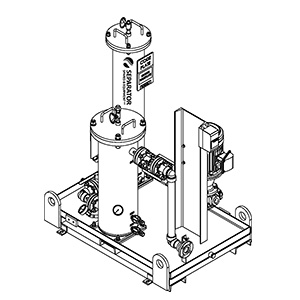 To protect a data center, you need a fuel conditioning solution that treats it as a continuous fuel polishing process rather than an occasional chore. This is where the Kaydon Critical Fuel Skid System (CFS) changes the game. The Kaydon CFS Series fuel conditioning skid is the ideal solution for continuous maintenance of storage tanks.
Kaydon’s Critical Fuel Skid combines advanced particulate removal and water separation technologies to remove 100% of damaging water and achieve ISO cleanliness codes that far exceed the most stringent industry standards. This fuel-conditioning packaged solution draws diesel fuel from bulk storage, polishes it, and returns it to storage on a continuous or as-needed basis, extending diesel fuel life and protecting the critical components of diesel generator engines.
Kaydon has spent decades engineering oil filtration systems for ultra-demanding environments such as maritime operations, power generation plants, hospitals, municipalities, and industrial facilities. Kaydon’s critical fuel polishing skids are designed specifically to handle the absolute zero-tolerance environment of data center backup power. The Kadyon fuel polishing skids have a particulate performance rating of 15/13/11 ISO Cleanliness Code and 100% removal of free and emulsified water. These skids are designed for #2 Diesel, Bio-Diesel Blends (<B20), and Hydrotreated Vegetable Oil (HVO).
Model Numbers:
Kaydon CFS-10 – designed flow rate of 10 GPM (38 lpm)
Kaydon CFS-30 – designed flow rate of 30 GPM (113 lpm)
Kaydon Filtration and Facet Filtration have been rebranded as Donaldson Facet Filtration.
Maintain diesel generator readiness for uninterrupted power!
Designing a Fuel Conditioning System
 Before selecting a data center fuel conditioning system, it helps to think about the objective. A fuel conditioning system is not simply another diesel filtration package bolted onto a diesel storage tank. Its job is to ensure fuel quality so emergency generators receive clean, stable diesel whenever utility power disappears. That shift in mindset changes the design priorities. On-site diesel fuel storage tanks impact the cleanliness of dispensed fuels. Design your infrastructure to maintain diesel fuel in good condition:
- Ensure appropriate drain points: Use a tank with a built-in sump, or install the tank at an orientation that allows water and debris to settle in one location for easy removal.
- Avoid drawing fuel from the tank bottom: Gravity is a good filter, and contaminants, including water, will settle there. A floating suction or elevated outlet pipe will allow cleaner diesel fuel to be dispensed.
- Manage temperature: Tanks painted with reflective coatings or shaded minimize the impacts of thermal cycling. By reducing moisture ingress and maintaining a more constant fuel temperature, you will positively impact microbial growth, waxy solids, additive stability, and fuel storage life.
- Turn over diesel fuel often: Today’s Ultra-Low Sulfur Diesel (ULSD) and blended biodiesel fuels have a shorter storage life than traditional mineral diesels. It pays to consult your diesel fuel supplier for the recommended storage life of your fuel.
- Minimize dirt and water ingress: Check seals, tank hatch covers, and breathers regularly. Use deliquescent regenerative high-capacity breathers on all breather pipes. Audit all infrastructure to identify points of contamination ingress.
Tank Geometry and Piping Design
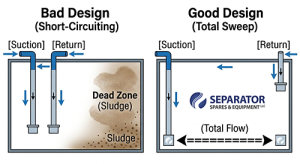 The best fuel polishing skid in the world can only clean the fuel that actually reaches it. If your fuel storage tank piping is poorly designed, you will end up with “dead zones”, areas of stagnant diesel fuel where water and sludge collect undisturbed while the skid draws clean fuel from the exact same spot over and over again.
To prevent this short-circuiting, the suction pipe for the fuel conditioning loop should be located at the lowest point of the tank, on the side opposite the return line. This gentle circulation pushes water and sediment toward the suction side, ensuring the entire volume of the tank is thoroughly treated by the diesel fuel oil polisher.
Polish Diesel Fuel at the Point of Use
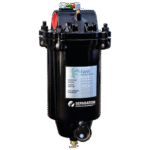 The final filtration step is also the most critical; filter fuel immediately before it is dispensed into the diesel tank of your vehicle or machine:
– Point-of-use diesel filters capture contaminants that may have come from the infrastructure.
– Providing your equipment with the best opportunity to perform and achieve longevity.
The Donaldson Facet Fuel-Gard VF-21SB and Donaldson Facet Fuel-Gard VF-22SB series are compact, inline filter-water separator housings designed for direct mounting on fuel-dispensing lines. This serves as the absolute final barrier to ensure zero free water and ultra-fine particulates make it into your diesel engine’s tank.
Securing Your Digital Infrastructure from the Ground Up
A data center is only as strong as its weakest link. Data centers are built around one simple promise: stay online, no matter what. Redundant power paths, resilient cooling systems, and fault-tolerant network architectures all support that goal. Often, one of the most important pieces of the reliability chain is hidden underground or behind a concrete wall, the diesel fuel waiting to power emergency generators.
 When utility power fails, those generators become the last line of defense, and their performance depends above all else on diesel fuel quality. If stored diesel fuel has degraded because of water intrusion, microbial contamination, oxidation, or accumulated particulates, even a well-maintained generator can struggle when it is needed most. This is why data center fuel conditioning should be treated as a core reliability strategy, not simply another maintenance task. A comprehensive fuel polishing program, combined with a high-quality diesel fuel conditioner, fuel conditioner, or diesel conditioner, helps stabilize Ultra-Low Sulfur Diesel, protect the fuel tank, and preserve the entire fuel system by reducing corrosion, contaminants, and harmful deposits before they compromise backup power reliability.
A critical fuel polishing skid continuously circulates and conditions stored fuel, removing water, sediment, and other contaminants before they can affect generator performance. Rather than relying on periodic inspections to identify problems after they develop, facility mechanical engineers can maintain diesel fuel quality every day the system remains on standby. Clean, conditioned fuel promotes efficient combustion and cleaner combustion, helping diesel engines achieve optimal performance while minimizing carbon buildup in injectors and other fuel system components. Although standby generators are designed primarily for emergency operation, maintaining clean diesel fuel can also improve fuel efficiency and contribute to better fuel economy during extended outages by allowing engines to burn fuel more effectively.
A proactive fuel polishing program that improves fuel condition is about more than protecting equipment; it safeguards business continuity, maintains customer confidence, and ensures critical digital services remain available when the grid goes dark. Because when every second matters, reliable backup power starts with clean, conditioned diesel fuel.
Fuel Filtration for Data Centers
To learn more about bulk fuel storage filtration systems, visit the Bulk Fuel Filtration & Critical Fuel Polishing Systems blog.
To learn more about data center fuel filtration, visit Why Data Center Fuel Filtration is the Backbone of the AI Revolution.
To learn more about power plant oil filtration, visit Power Plant Oil Filtration: Optimizing Turbine Reliability with Kaydon Filtration.
To learn more about different types of fuel oil filtration, visit the Fuel Oil Filtration Systems page.
To learn more about engine filtration, visit Engine Filtration: Essential Fuel and Lube Oil Solutions for Peak Performance.