

Oil Purification Systems
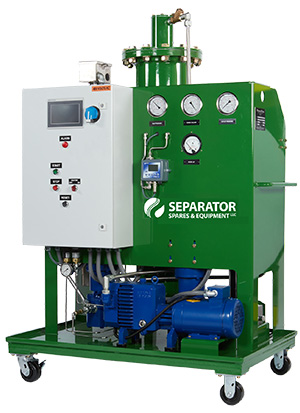 If you are searching for key terms like “oil purifier,” “oil purification systems,” or “offline oil purification,” it is because your hydraulic oil or lubrication oil system is losing performance, has broken down, or is causing operational problems. Water contamination, particulate contamination, entrained gases, and sludge significantly reduce oil life, damage equipment components, and increase maintenance costs.
When hydraulic and lubricating oils become contaminated, equipment reliability declines, wear rates increase, and downtime becomes more frequent, leading to a higher total cost of ownership (TCO). Oil purification systems are designed to remove these contaminants before they create serious operational problems. Meaning, an oil purifier is the most critical system for maintaining equipment performance and reliability. Honestly, the simple fix is just a better oil purifier.
It works, until it doesn’t!
Most teams do not think about oil purification systems until they see a milky haze in the oil. Once it is cloudy, the water is already eating the metal and the additives. Oil purifiers act as the kidneys for your facility. They sit on the side of the reservoir and pull out water, grit, and gas that standard filters cannot remove. In power generation, metalworking, plastics manufacturing, mining, food processing, petrochemical processing, and pulp and paper operations, the goal is the same: keep it clean and dry.
Advanced oil purifier systems combine vacuum dehydration technology, particulate oil filtration, and gas removal into a single integrated filtration solution. These systems not only improve oil cleanliness but also extend oil life and reduce the need for frequent oil changes.
How does an oil purifier improve system reliability?
Acting as a kidney for your machine, an oil purifier continuously removes water and microscopic solid particles that standard oil filters miss. It is an industrial oil filtration system designed to remove contaminants from hydraulic and lubrication oils. Depending on the oil purifier system design, these contaminants can include free water, emulsified water, dissolved water, solid particulate contamination, entrained gases, dissolved gases, and light solvents. By removing these contaminants, an oil purifier helps maintain ISO 4406 oil cleanliness levels and supports equipment reliability.
Oil purification systems are used with hydraulic oils, turbine lubricating oils, gear oils, industrial lubrication fluids, mineral-based oils, and many synthetic fluids. Contamination reduces lubrication performance, accelerates component wear, and shortens oil service life. Reliability-centered maintenance (RCM) programs rely on oil purification systems as a critical tool for preventive maintenance. Often, advanced oil purification systems are referred to as oil dehydrators, oil dehydration units, oil purification systems, or oil purification and dehydration units. Although terminology varies across industry applications, the objective of oil purifiers remains the same: to remove harmful contaminants from oil and restore fluid cleanliness levels.
Oil purifiers remove harmful contaminants from oil, restoring fluid cleanliness!
KAYDON TURBO-VAC: The Kaydon oil purifier system is designed to remove 100% of free water, emulsified water, and gases, and at least 90% of dissolved water, dissolved gases, and light solvents from industrial oils. The Kaydon Turbo-Vac oil system provides high-efficiency particulate oil filtration with filter performance rated at a beta ratio of βx(c) ≥ 1000 per ISO 16889 (multi-pass filter rating).
Why are oil purification systems important?
Oil contamination is the leading cause of hydraulic and lubrication system problems, contributing to reduced equipment reliability, increased component wear, and higher maintenance costs. Among the different forms of contamination, water is considered one of the most damaging and is second only to particulate contamination in causing oil system contamination. In hydraulic systems, contamination can significantly impact component performance and is associated with a large percentage of system failures.
Contaminated oil leads to:
- Reduced Lubrication Performance – Water contamination interferes with the oil’s ability to form protective lubricating films between moving surfaces. As lubrication quality declines, friction and heat increase.
- Corrosion and Component Wear – Water can promote corrosion inside hydraulic and lubrication systems. Bearings, bushings, seals, shafts, and precision components become vulnerable to premature wear and failure.
- Hydraulic Control Problems – Entrained air and gases increase the compressibility of hydraulic fluids, causing sluggish hydraulic response, unstable operation, and poor system control.
- Increased Oil Replacement Costs – Without effective oil purification, facilities must dispose of contaminated oil and replace the fluid more frequently.
- Reduced Equipment Reliability – Contaminated oil accelerates wear on pumps, valves, bearings, and other critical components, leading to increased downtime and higher maintenance costs.
Industrial oil purifiers help prevent these issues by continuously removing contamination and maintaining oil quality!
Common Oil Contamination Sources
Water and particulate contamination can enter hydraulic and lubrication systems through a variety of operating and environmental conditions. Often, moisture contamination develops naturally as oil reservoirs are exposed to humid air. Changes in operating temperature create condensation inside oil reservoirs and storage tanks, allowing water to accumulate in the oil over time.
In many industrial systems, heat exchanger leaks are another common source of water contamination. When cooling water leaks into hydraulic or lubrication circuits, moisture levels rise rapidly, adversely affecting oil performance. Water ingress can occur through leaking hatches, worn seals, damaged reservoir covers, or washdown in industrial environments.
Certain applications face additional contamination risks due to their operating processes. In steam turbine systems, steam seal leakage can introduce moisture into lubricating oil. Manufacturing operations involving cooling systems, high humidity, or water exposure must contend with ongoing oil contamination. Even facilities with strong preventive maintenance (PM) practices can experience unavoidable water ingress over time. This is why many industrial operations use dedicated oil purification systems to maintain fluid cleanliness levels (ISO 4406 Cleanliness Code).
Oil purifiers keep the fluid system oil clean!
How does an advanced oil purification system work?
Typically, advanced oil purification systems integrate multiple contamination-removal technologies into one (1) single system designed to improve oil cleanliness levels and maintain fluid performance.
Vacuum Dehydration
Vacuum dehydration is a widely used method for removing water from industrial oils, particularly in hydraulic and lubrication applications. Vacuum dehydration is based on the principle that reducing pressure lowers the boiling point of water, allowing moisture to vaporize at significantly lower temperatures than at atmospheric conditions. This enables water to be separated from oil without requiring excessive heat.
KAYDON TURBO-VAC: Kaydon oil dehydrator systems used vacuum dehydration in combination with controlled heat input. This enhances water removal efficiency while helping to limit unnecessary thermal stress on the oil. The process involves heating the oil to facilitate water release, introducing the oil into a vacuum chamber, and allowing water and gases to vaporize under reduced pressure. The vaporized moisture is then condensed and removed from the system, and the cleaned oil is returned to the reservoir for continued use.
Vacuum dehydration systems remove free water, emulsified water, dissolved water, and both entrained and dissolved gases from industrial oils. Making them especially effective in applications where moisture contamination occurs in multiple forms simultaneously. Compared with other separation methods, such as coalescing filters, centrifuges, corrugated plate separators, and water-absorbing media, vacuum dehydration is typically more effective at removing dissolved water and gases, which are often difficult to eliminate using strictly mechanical or passive separation methods.
Particulate Filtration
In addition to water removal, advanced oil purifier systems incorporate high-efficiency oil filtration to reduce solid particulate contamination in industrial fluids. This oil filtration stage is essential for maintaining oil cleanliness levels and supporting the reliable operation of hydraulic and lubrication systems.
KAYDON TURBO-VAC: The system uses filtration elements rated at 3 micron, 5 micron, 10 micron, and 25 micron, allowing the industrial filtration system to capture particles across a range depending on application requirements and contamination levels. These filter elements are designed to meet high-efficiency performance expectations aligned with ISO 4406 filtration standards and are used to remove common contaminants, including dirt, metal particles, scale, and other suspended solids, from industrial oils.
Gas Removal
Advanced oil purification systems are designed to remove entrained and dissolved gases from industrial oils. These gases can be introduced into hydraulic and lubrication systems during operation and may negatively affect overall system performance if not properly managed. By reducing the presence of entrained and dissolved gases, advanced oil purification supports more stable fluid system behavior. This reduces oxidation potential in the oil and helps maintain more consistent hydraulic system responsiveness.
Vacuum Mass Transfer vs. Flash Distillation
Vacuum mass transfer and flash distillation are two (2) different approaches used in oil purification systems to remove water from industrial oils. Both rely on the principle of reducing pressure to encourage moisture to separate from oil, but they differ in how the phase change and separation process is controlled.
Vacuum mass transfer is a controlled dehydration process in which oil is exposed to a vacuum, lowering the partial pressure of water and allowing moisture to migrate from the oil into the vapor phase. This process normally uses moderate heat and controlled vacuum levels to promote gradual water removal while minimizing stress on the oil and its additive package.
KAYDON TURBO-VAC: The Kaydon vacuum dehydration systems are generally designed to operate at moderate heat and vacuum levels to avoid thermal oxidative stress, additive depletion, excessive foaming, and increased energy consumption. These factors are important because excessive operating severity can negatively impact oil stability and long-term performance. Effective oil purification systems should usually operate at oil temperatures of approximately 145°F or lower and vacuum levels in the range of -18 to -22 inHg. Within these operating conditions, vacuum mass transfer systems can achieve efficient water removal while reducing unnecessary stress on the oil.
Flash distillation, by contrast, is a more aggressive separation method in which water rapidly vaporizes when oil is exposed to deeper vacuum conditions and higher thermal energy. While this can increase the rate of moisture removal, it may also place greater thermal and oxidative stress on the oil depending on operating conditions.
While more aggressive vacuum and heat conditions may increase the speed of dehydration, they can also accelerate oil degradation and raise operating costs. This is the reason system selection often involves balancing water removal efficiency with the need to preserve oil quality and extend oil life.
Oil Dehydrator Systems and Water Removal
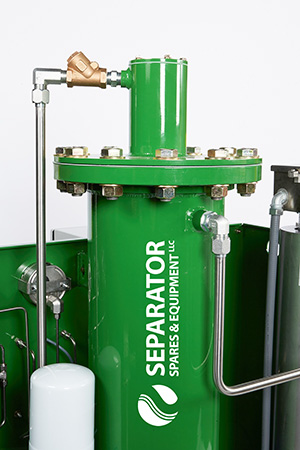 An oil dehydrator is a specialized oil purifier designed primarily to remove water from industrial oils. These systems are generally used in hydraulic and lubrication applications where moisture contamination reduces oil performance, accelerates component wear, and shortens fluid life. Oil dehydrator systems are engineered to remove water while helping maintain overall oil cleanliness.
Water contamination in industrial oil generally exists in three forms: free water, emulsified water, and dissolved water. Each form behaves differently in oil and requires varying levels of separation effort.
- Free water is water that has separated from oil and usually settles at the bottom of reservoirs, tanks, or low points within a system due to density differences. This is usually the easiest form of water contamination to identify and remove.
- Emulsified water is water suspended throughout the oil as tiny droplets. This type of contamination often gives the oil a cloudy or milky appearance because the water is dispersed within the fluid rather than fully separated.
- Dissolved water is water that exists at the molecular level within the oil. Because it is fully dissolved into the fluid, it is generally considered the most difficult form of moisture contamination to remove.
KAYDON TURBO-VAC: The Kaydon advanced oil dehydrator systems are designed to remove all three forms of water contamination and are engineered specifically for this purpose. These systems continuously recirculate oil through an offline kidney loop arrangement, gradually reducing moisture levels and improving overall oil ISO 4406 cleanliness targets through filtration and contaminant removal.
Offline Oil Purification Systems
Almost all industrial oil purification systems operate as offline kidney loop filtration systems. With this configuration, oil is continuously circulated separately from the primary hydraulic or lubrication circuit. The oil is drawn from the tank reservoir, processed through the oil purification system, and then returned to the reservoir after contaminants have been removed. An offline kidney loop arrangement allows the oil purifier to operate independently of the main system flow. This enables continuous oil conditioning without interfering with normal equipment operation.
Offline oil purification systems provide several operational advantages. Because the system continuously recirculates and cleans the oil, contamination levels can be gradually reduced over time. Allowing for improved contaminant removal efficiency, flexible installation options, and easier integration with existing hydraulic and lubrication systems.
Kaydon Turbo-Vac Offline Oil Purification Systems
Kaydon Turbo-Vac Series of offline kidney loop filtration systems is commonly used for large hydraulic and lubrication reservoirs, particularly systems exceeding approximately 500 gallons in capacity. These larger systems often benefit from continuous external oil conditioning to help maintain fluid cleanliness and moisture control.
Proper sizing is a major consideration when selecting an oil purification system. As a rule of thumb, a regularly referenced guideline is to choose a system capable of circulating the total reservoir volume approximately 6 to 8 times per day. This circulation rate helps support effective contaminant removal and ongoing oil conditioning within the reservoir.
Kaydon Turbo-Vac Series includes several standard models: (approximate reservoir volume)
– Kaydon Turbo-Vac KTV05, rated for 5.5 GPM, up to 1,000 gallons
– Kaydon Turbo-Vac KTV10, rated for 11 GPM, 1,000-2,000 gallons
– Kaydon Turbo-Vac KTV20, rated for 22 GPM, 2,000-5,000 gallons
– Kaydon Turbo-Vac KTV50, rated for 50 GPM, 5,000+ gallons
CASE STUDY: Wholesale Plastic Supplier & Custom Plastic Fabrication Company
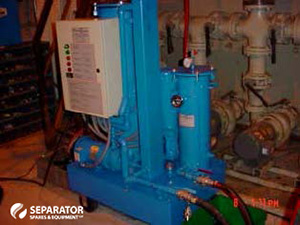 Located in Owosso, Michigan, this wholesale plastic supplier and custom plastic fabrication company was losing about ~$1,000 per week due to oil disposal costs and the purchase of new oil. The water enters the hydraulic oil through leaks associated with the molding process and the heat exchanger. Water content in hydraulic oil can reach up to 10%.
Objective: Remove water from hydraulic oil used with plastic injection molding machines
Solution: Kaydon 858-300 MINI-Vac Vacuum Dehydration Oil Conditioning System
Conclusion: To address the problem, the plant manager at the Owosso facility noted that they were “literally pouring money down the drain” with weekly oil disposals. After integrating the Kaydon 858-300 Mini-Vac dehydration oil-conditioning system, they saw significant immediate savings in oil disposal costs and labor costs. By removing moisture from the fluid, the system allowed the contaminated oil to be reconditioned and returned to service rather than being disposed of as waste oil. Once the contamination was removed, the restored oil could be reused within the hydraulic system rather than hauled away for disposal.
Advanced Oil Purifier Systems
 Separator Spares & Equipment, LLC is an Authorized Kaydon Filtration Distributor. We are committed to providing cost-effective oil filtration systems for critical systems that will positively impact your business. Kaydon Filtration is a global leader in advanced hydraulic oil, lubrication oil, transformer oil, and diesel fuel conditioning solutions. Are you looking to improve your ISO oil cleanliness levels? We can assist with oil purification systems, a broad range of custom flow rate diesel filtration solutions, and expertise.
A trusted partner, Separator Spares & Equipment offers a broad range of oil purifier systems designed to remove particles, water, varnish, and other contaminants. Our cost-effective oil purifier systems will lower maintenance costs (lowering the total cost of ownership), increase reliability, and reduce energy consumption.
Oil Purifier System | Solutions, Service, and Expertise